
More stories

  • WATCH: This Fish Shoots Its Prey With a Water Gun

    Archerfish attack prey in quite an unusual way — by spitting at it. They’ve got great aim, too. Adults almost always hit their target on the very first shot, dislodging and bringing down insects and small animals above water up to 10 feet away. These aptly-named fish hover underwater waiting for prey to come into […] More

  • Nile Crocs Invading Florida, Humans To Blame

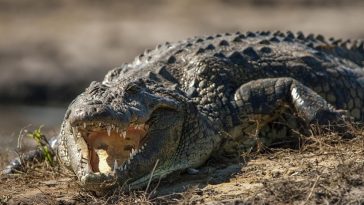
    DNA tests have confirmed that three crocodiles found in Florida over the past 5 years are “man-eating” Nile crocodiles that are actually native to Africa. And there are almost certainly more out there. A manager at the Florida Museum of Natural History stated, “The odds that the few of us who study Florida reptiles have […] More

  • Ants Invade Wasp Nest with Amazing ‘Living Bridges’

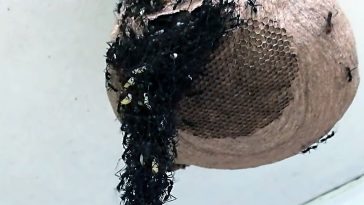
    Army ants are known for their colossal foraging groups, which can exceed 15 million individuals. These insanely productive ants are constantly on the move in search of prey, covering wide swaths of ground, with an entire colony capable of carrying and consuming thousands of prey items in a single day. But from time to time, […] More

  • Bobcat Climbs 40-Ft Tall Cactus to Evade Mountain Lion

    We’ve all heard of a cat stuck in a tree … but how about a bobcat on top of a cactus? Nature photographer Curt Fonger captured the above photo of one of North America’s most elusive predators in an unusually precarious position, perched atop a saguaro cactus. The image, taken in Gold Canyon, Arizona, show […] More

  • Island Had to Build Bridge for Legion of 47 Million Crabs

    Christmas Island, a tiny Australian territory in the middle of the Indian Ocean, has a bit of a crab problem. An estimated 40 to 50 million Christmas Island crabs reside on this 52 square mile island. In comparison, the human population there is only about 2,000. Each year, these fire-engine red crustaceans make their way […] More

  • Massive ‘Siberian Unicorn’ Roamed the Planet with Humans

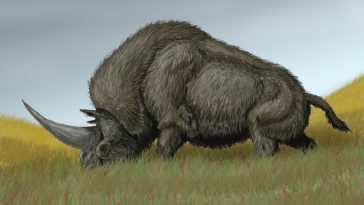
    Early humans roamed the planet with a colossal shaggy rhinoceros that scientists have dubbed the “Siberian unicorn.” The so-called unicorn, officially known as Elasmotherium sibericum, was a large rhinoceros that wandered Eastern Europe and Central Asia from 2.6 million years ago until just around 39,000 years ago. The animals weighed a staggering 4 tons and were adorned […] More

  • African Elephants Evolving to Lose Tusks, Thanks to Decades of Poaching

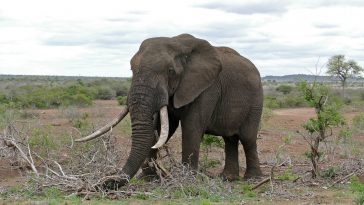
    The iconic tusked elephant may soon be a thing of the past, say researchers. Male African elephants’ tusks are smaller than in the past, and many females are missing them altogether due to years of intense poaching pressure. Because individuals with the largest tusks have been targeted by poachers for so long, their genetics are […] More

  • Prehistoric “Carolina Butcher” Croc Stood 9-Ft Tall on Hind Legs

    If you thought crocodiles were intimidating, you might be horrified to know that an aggressive, 9-ft-long crocodilian predator once patrolled its North American hunting grounds on hind legs, snacking on small mammals and reptiles. Carnufex carolinensis — also known as the “Carolina Butcher” — existed long before the dinosaurs rose to dominance, roughly 230 million years ago. The […] More

  • Wombats Are The Only Animals That Poop Cubes. Here’s How They Do It

    Wombats may have the most uniquely-shaped poo in the animal kingdom, and scientists have finally figured out why. Wombats, cousins of the koala, are the only animals to produce cube-shaped scat. They use their feces to communicate with each other through scent and mark territory by piling the pieces next to burrows or on logs […] More

  • Mammals Can’t Evolve Quickly Enough to Survive Humanity

    Human activity is killing wildlife on an unprecedented scale — and mammals will need millions of years to recover, according to a recent report. Researchers at Aarhus University in Denmark have concluded that if we don’t improve current conservation efforts, so many large mammal species will go extinct in the next 50 years that it will […] More

Load More
Congratulations. You've reached the end of the internet.